


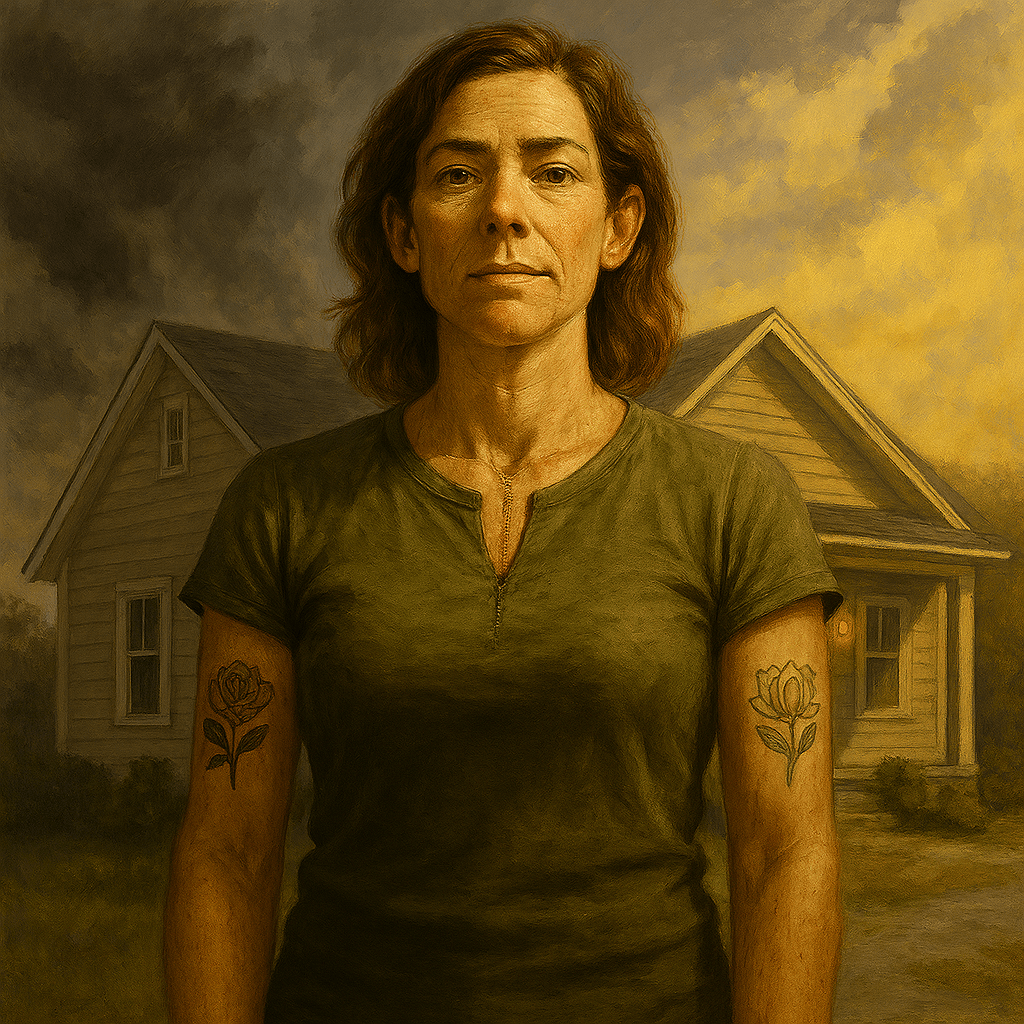
We all carry stories written into us by the people we meet. Some of those stories are gentle, filled with love and encouragement. Others are sharp, carved by pain and hardship. Together, they shape the person we become.
Most of us remember the positive influences more easily. We cling to the people who lifted us, encouraged us, and showed us love. But the negative ones leave their marks too—engraved into our cores in ways we can never fully erase.
Some of the bad people we meet in our lives melt away in time, and their past actions are just that, echoing actions of the past. We grow past them and forget them. But a few remain. Etched into our beings like a knife nicking into bone. Carving a story that built us.
For me, there are a few men who left those lasting marks: two of my exes, my first stepfather, and my biological father.
Then there are many positive ones. They too etch themselves into our lives. Staining into our flesh like tattoos we are okay with showing off. My husband is one. My stepfather from my youth, though age and illness have changed him. A few of my past bosses. And even my young son.
We all carry both good and bad marks. And strangely enough, even the bad can leave something useful behind—helping shape who we become.
My father and my first stepfather were not good men. They were abusive—both physically, emotionally and mentally. For me, all forms of abuse cut the same. As painful as it is to admit, those experiences taught me to recognize the signs. As a child, I promised myself: I will never let myself be in that situation.
Yet I found myself there again, with my oldest daughter’s father. Abuse doesn’t arrive suddenly; it creeps in, disguised as something else. If I hadn’t lived through the trauma of my father figures, and if I hadn’t seen what a good man could be like through my later stepfather, I might not have recognized it.
My daughter’s father is not a bad man. He simply wasn’t good for me at that time. Today, he is a loving husband and father, and I’m glad for his happiness. Still, I carry anger from those years—the yelling, the things thrown, the fists in walls, and once even at me. Those moments were an eye-opener. Unlike my mother, I refused to stay. I had grown up hearing every dark tale she endured with my father, and I refused to repeat her steps.
My first stepfather was emotionally abusive and physically abusive toward my sister and me, though never toward my mother. Those years are etched more strongly in my memory than my biological father.
My first husband was not physically violent to me, but he was emotionally abusive. And when my first stepfather began cheating on my mother, I saw echoes of those same behaviors in the man I married. You read about these patterns, but until you’ve lived through them, you don’t always recognize them in your own life. The violent arguments and the heavy silences carried over into my marriage.
He was quick to deflect blame, pointing fingers at me. To my dismay, my sisters believed him. They thought I had been dishonest, and no amount of truth could change their minds. His new wife even echoed those lies to my daughter. And when the marriage ended, I lost everything in the divorce. He took it all, leaving me to rebuild from nothing. That loss became a turning point—the lowest valley I had to climb out of.
When my daughter later asked me about it, I refused to answer—at first. But as she grew older, the truth surfaced. She remembered the woman herself, remembered the things she said. My daughter had lived that reality alongside me, even if she didn’t understand it at the time.
I know those experiences left a mark on her, just as mine did on me. I wish she hadn’t had to carry that burden. But those negatives, those painful memories, shaped me. They taught me what a good life and a good man should look like.
And beyond the men in my life, instability itself carved its mark. I grew up moving constantly—thirteen different school districts, not just schools, but districts. My parents couldn’t hold jobs or pay bills, and that chaos shaped my childhood. It hurt my grades, disrupted my ability to learn, and left me without the stability every child deserves. My mother never owned a house, and that fact weighed heavily on me.
That’s why purchasing my own home was more than just buying a house—it was breaking a cycle. It was claiming stability I never had and proving to myself that I could build something permanent. Because of what I experienced in my divorce, I made the decision not to put my husband on the loan. It was a way to protect myself, to ensure I would never lose everything again. Yet I also left it so that if something happened to me, he could take over the loan, and the house would be his. It was both protection and love—born from scars but shaped into security.
As a parent, I strive to give my children what I lacked: a steady place to grow, a safe foundation. When I tried to go to college, I had no support. I had to choose work over school, time and time again. So now, I make sure my kids have a home where they can live free while they study, so they can finish if they choose to.
People often say today’s kids have it easier because we had it harder. But I believe any good parent wants better for their children than what they had. My parents didn’t give me that, and maybe that’s why I fight so hard to ensure my children never know what it’s like to go without.
I still suffer from the pains of the past, but I reflect on them often. They helped me grow into the independent woman I am today. There’s truth in the saying, “What doesn’t kill you gives you unhealthy coping mechanisms.” It scars you, carves into you, and forces you to learn. I don’t recommend it if you can avoid it. But for those who have lived through it—know this: better days are possible.
We all carry scars and tattoos, etched into us by the people who’ve crossed our paths. Some marks we hide, others we show proudly. But together, they tell the story of survival, growth, and resilience. My house is one of those tattoos—a mark I’m proud to show off. It represents stability, protection, and love, built from the lessons of my past. If you carry scars, know that they don’t define you—they remind you of your strength. And if you carry tattoos of love, let them shine. Because in the end, both the pain and the joy carve us into who we are meant to be.
Until next time, keep the coffee strong and the chaos manageable.
 The Overbooked Life
Leave a comment